Floor Setup
Machine spacing, sightlines, queue pockets, and prize counter adjacency are reviewed against the way families move through your venue.
Service & Parts
Arcade redemption equipment succeeds when the operator can see the whole system: cabinet draw, card reader behavior, ticket handling, prize counter load, aisle width, guest dwell time, and spare parts readiness. Harman's service program connects those details before the purchase order is final, then keeps them visible after installation.
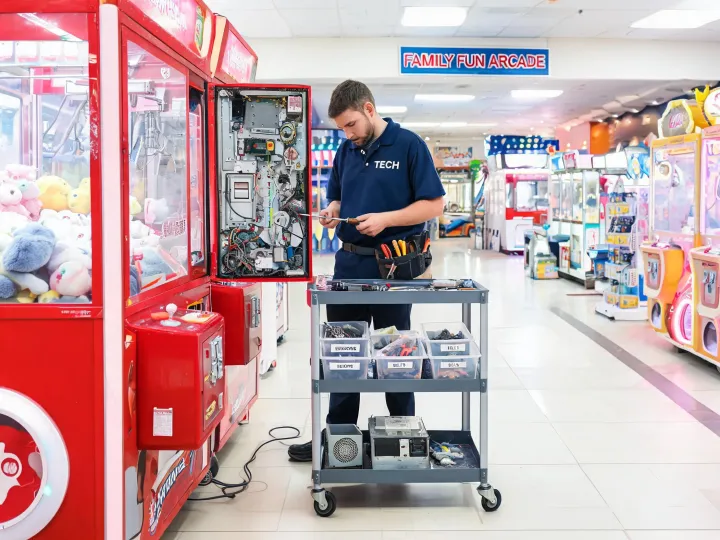
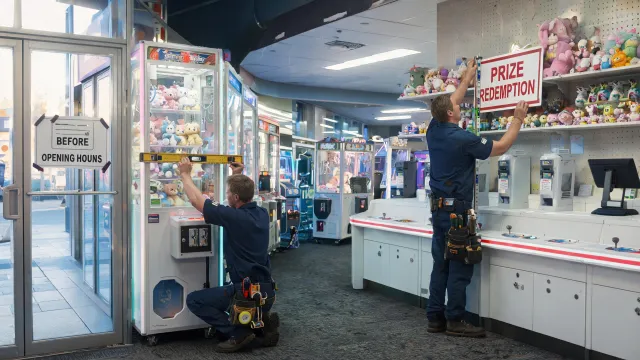
A 28,000 sq ft center had a strong birthday business but uneven arcade revenue. Harman reorganized traffic into three play zones, moved prize cranes closer to the counter, and prepared a parts kit for the ten highest-risk cabinet families. The operator used the new plan to reduce staff guesswork, shorten guest wandering time, and make weekly revenue reviews easier to act on.
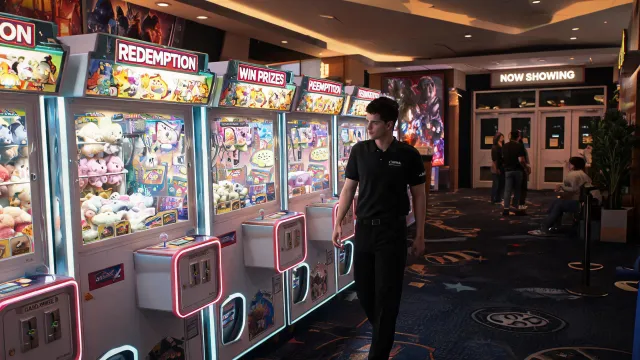
A cinema operator needed a compact game wall that worked between showtimes without blocking concession traffic. Harman selected quick-play cabinets, a narrow air hockey footprint, and redemption units with clear service access from the rear. The result was a lobby attraction that staff could supervise while maintaining ticket, food, and cleaning routines.
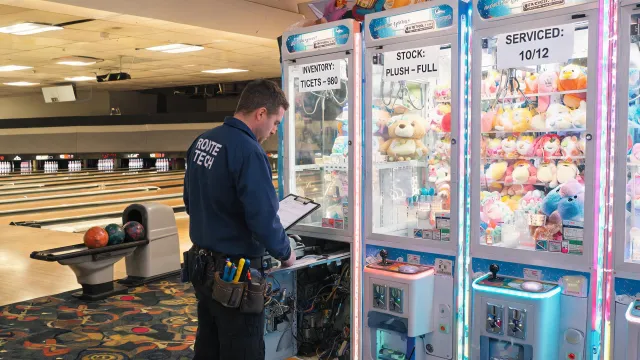
A route operator managing mixed locations needed a cleaner way to prioritize service stops. Harman built a parts map by cabinet family, paired likely failures with common symptoms, and created a weekly check routine that non-technical site staff could complete. That gave the operator better information before dispatch and fewer incomplete truck rolls.
Plan Your Setup
We will return with the questions your purchasing team should settle before equipment is ordered: power runs, network drops, redemption capacity, prize inventory, and service access. The goal is not to sell the largest list of machines. The goal is to build a floor your team can operate with confidence.