Harman Kardon Onyx vs Commercial Audio: What Blown Speakers Taught Me About Buying Sound
-
The comparison framework: consumer vs. commercial, and repair vs. replace
-
Round 1: Environment and abuse
-
Round 2: Service and repair
-
Round 3: Sound quality and tuning
-
Round 4: Total cost over three years
-
Round 5: Brand recognition and the pink headphones problem
-
So what should you choose?
-
How to fix a blown speaker before you replace it
Six years ago, I started handling service and replacement orders for fitness clubs and indoor entertainment spaces. I've made a lot of mistakes since then—11 big ones by my count, roughly $28,000 in wasted budget. The one I still kick myself for: recommending a consumer Harman Kardon Bluetooth speaker for a cycling studio. It sounded great for six weeks. Then the voice coil started to buzz.
If you're trying to choose between a portable speaker like the Harman Kardon Onyx Studio 8 and a commercial audio system, or deciding whether to repair a blown speaker or replace it, this comparison is for you. I'll use the same framework I wish I'd been given on day one.
The comparison framework: consumer vs. commercial, and repair vs. replace
The easiest mistake in AV buying is to ask which product is 'better.' The more useful question is: which tool fits the environment and the operating budget?
I'll compare two paths for a fitness venue:
- Path A: a consumer audio product, like the Harman Kardon Onyx Studio 8 or even a pair of Beats headphones.
- Path B: a commercial audio system designed for permanent installation.
I'll also compare repair vs. replacement at the end, because 'how to fix blown speaker' is one of the first things a facility manager searches after the bass drops out.
Round 1: Environment and abuse
The Onyx Studio 8 is a well-built portable. But 'portable' is the wrong spec for a room where people sweat on equipment, drop weight plates, and kick walls. If you have an Assault Fitness treadmill, for example, you know how much vibration and chalk dust one high-intensity zone creates. A consumer speaker with a fabric wrapper is not built for that.
It's tempting to think a small speaker with good Bluetooth is enough. But a commercial unit is designed to survive continuous use, humidity, and physical impact.
In this round, commercial audio wins. No contest. It's not because the consumer speaker sounds worse; it's because the environment is hostile.
Round 2: Service and repair
Search 'harman kardon speaker repair' and you'll find video tutorials, third-party repair shops, and posts about shipping sealed units. Some repairs are easy, like reseating a loose speaker wire or replacing a foam surround. Many consumer speakers, though, are built for thin aesthetics, not serviceability.
I once had a shop quote $95 to repair an Onyx speaker. At the time, a working unit from a Thai retailer was about $125 on sale. That made the repair hard to justify.
This is where the 'harman kardon onyx studio 8 price thailand' search becomes relevant. As of January 2025, I saw Thai online listings around ฿8,900–12,900 depending on promotions. Verify current pricing before you make a repair decision. A general rule from my own spreadsheets: if the repair estimate is more than 40% of the replacement price, replace the consumer product.
Commercial speakers are different. A replaceable driver for a mid-size install can cost $40–90, and a technician can swap it in 15 minutes. That's the real advantage: modularity. If the amplifier fails, you replace the amp module, not the whole baffle.
Round 3: Sound quality and tuning
Here's the result that surprised me: a consumer speaker can win this round in a small room. The Onyx Studio 8 uses Harman's published listener preference research—the so-called Harman Curve—which is specifically tuned to sound pleasant to most people. At a desk or in a small office, it can out-muscle an outdated commercial box.
But sound quality in a venue is about coverage, not just frequency response. A commercial speaker includes dispersion data, mounting angles, and SPL coverage patterns that help a designer fill a 120-square-meter group fitness room evenly. Put a single portable speaker in that room, and you get a hot spot near the speaker and muddy sound at the back.
The Harman Curve makes a speaker sound good close up. It does not fix poor placement or bad room acoustics.
So the dimensional verdict: consumer wins on close-range charm; commercial wins on consistent coverage.
Round 4: Total cost over three years
The consumer unit has a lower purchase price. That's not the same as a lower cost, especially when the speaker is running 10+ hours a day.
In three years, I've overseen the replacement of maybe 40 speakers—it could be 35; I'd need to count our purchase orders. Almost every failure was a consumer model in a commercial space. Each failure involved labor, a site visit, and customer frustration. The cheap speaker became the expensive part (surprise, surprise).
A commercial system with a 5-year warranty will usually cost more upfront. It will also usually fail less often, and when it does fail, the repair is faster. At least, that's been my experience with small-venue systems.
Round 5: Brand recognition and the pink headphones problem
Now let's talk about the emotional side of buying.
The phrase 'beats pink headphones' probably gets searched because someone wants a particular colorway or brand status. That's a normal consumer purchase. It is not an audio infrastructure decision. Pink Beats headphones are great as a personal reward, a staff gift, or a retail product. They are not part of a facility audio system.
Brand recognition still matters in B2B. A Harman Kardon badge in a premium lounge tells guests that the venue invested in sound. That's real value. But it's a different value from a serviceable, installed system. The mistake I made was treating the brand's consumer product as if it were a commercial system because the logo said something I liked.
So what should you choose?
If you are buying for a small café, a hotel suite, or a home office, the Harman Kardon Onyx Studio 8 is a fine choice. Buy it if the Thailand price makes sense, and skip the repair estimate if the damage is severe.
If you are buying for a gym, an indoor entertainment venue, a classroom, or any space where sound has to cover a room reliably, choose a commercial system from a professional line—JBL Professional by Harman, or another brand that publishes dispersion and warranty details.
And if you are buying headphones for the front desk, buy the pink Beats if that's what makes the staff happy. Just don't hang them from the ceiling and call it a venue sound system.
How to fix a blown speaker before you replace it
If you've searched 'how to fix blown speaker,' here's the checklist I use before spending money on a replacement.
- Confirm the source isn't the problem. Swap the supposed blown speaker with a known-good speaker on the same amplifier channel. If it crackles too, your speaker may be fine and your amp might be clipping.
- Press the cone gently. Do it evenly around the edge. If you feel or hear scraping, the voice coil is damaged. For most small consumer speakers, a new driver costs less than a recone.
- Measure with a multimeter. Read DC resistance between the terminals. A reading near the speaker's rated impedance is good. An open circuit means the voice coil is burned.
- Inspect the foam surround. Foam rot can make the cone rub against the magnet. If the speaker is a 15-inch subwoofer, a recone kit is worth considering. If it's a $100 portable, it's not.
- Check the amplifier, not just the speaker. A common cause of blown speakers is an underpowered amp running into clipping. It's misleading to think only too much power kills drivers.
- Don't open a sealed consumer speaker before checking warranty. For Harman Kardon speaker repair, contact the dealer or an authorized service center first. Opening the unit can kill the warranty and make a small problem worse.
If the driver is fine, re-check the connections. Loose terminals can create an intermittent crackle that feels exactly like a blown speaker. I've pulled my hair out over a 'blown' speaker that just needed a 10-cent connector.
The real lesson from my mistakes: build your audio list around the room, the repair path, and the total cost. Let the logo be the tiebreaker, not the reason.
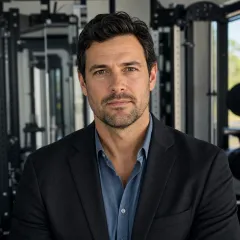
Marcus Feldman
Marcus Feldman is a commercial strength-equipment analyst covering selectorized machines, plate-loaded stations, Smith machines, functional trainers, power racks, benches, barbells, dumbbells, and cable systems. He applies ISO 20957-1 and ISO 20957-2 while comparing rated loads, stability, frame deflection, pulley ratios, cable travel, adjustment increments, guarding, entrapment points, fastener retention, and fatigue cycles. His guides help gym operators, coaches, facility planners, and procurement teams evaluate biomechanics, user capacity, floor layout, maintenance access, durability, and lifecycle value.
Ask Harman about this topic