Harman Kardon Aura Studio 4 Price Taiwan: A 72-Hour Audio Rescue
In March 2024, I got a call I almost didn't take. A family entertainment center in Taiwan needed a full audio system installed in 72 hours. Their original integrator had backed out, the opening had already been postponed once, and the owner was tired of excuses. 'If you can't do it, tell me now,' he said.
I'm a senior project coordinator at an AV integration company, and I've handled 200+ rush installations in eight years. But this one made me pause. Reading the scope, I saw it wasn't just a PA system. There was background music for the bowling lanes, a zone for birthday party rooms, a delay-fill setup for the atrium, and a wireless headset communication system for the floor team.
The good news: we're a Harman-authorized integrator. Through the Harman Audio special pricing program, we could pull JBL and Harman Kardon products through our regional distributor faster than usual. The bad news: the distributor was in a different country, and the entertainment center was on a tight budget.
I remember thinking: this is exactly the kind of project that creates legends or liars. We had a deadline, a changing client, and zero buffer for mistakes.
The Call I Didn't Want to Take
Before I said yes, I triaged the way I always do. Time? 72 hours. Feasibility? Only if the distributor could commit to a Saturday morning truck. Risk? Customs, a missing cable, one damaged speaker.
The owner's first question wasn't about JBL line arrays. It was simpler. 'What's the Harman Kardon Aura Studio 4 price Taiwan?' He wanted a premium Bluetooth speaker for the VIP lounge, near the owner's suite. I checked our distributor's list. The Harman Kardon Aura Studio 4 price Taiwan quote came back a little higher than what he'd seen on an online store. He wasn't happy. But the online store didn't offer local warranty support, and the import time would have blown the opening. We added it to the order and moved on.
That moment taught me something I still use: a price quote is only a small part of total cost. The 'cheap' listing with a two-week shipping window is not cheap when your opening is three days away.
The 36-Hour Problem
By hour 36, most of the audio gear was loaded. The main PA array, the zone amplifiers, the control rack, the ceiling speakers. We've done this enough to know that the visible equipment matters less than the stuff nobody sees. The client didn't care about impedance matching or delay tuning. They cared about 'Does it sound right?'
By hour 20, I had two engineers on site doing a structural survey. The building was a converted warehouse with exposed steel beams and concrete floors. That's a sound reflection nightmare. We specified ceiling speakers with 70V transformers for the party rooms and a pair of JBL line arrays for the atrium. Not because they were the most expensive option. Because coverage matters more than power.
Then the operations manager called. Her team of 18 floor employees all needed a reliable wireless headset for shift communication. She had already looked at consumer options. 'What about the Beats Solo3 Wireless on-ear headphones?' she asked. 'My son loves his. They're not too expensive.'
I get it. To a non-technical buyer, any wireless headset looks similar. But the Beats vs Apple headphones debate—and the whole consumer headphone market, for that matter—is not the same as picking gear for a noisy indoor venue.
Let me be direct: the Beats Solo3 Wireless on-ear headphones are fine for personal use. Apple's AirPods are fine too. They are not built for a ten-hour shift in a loud entertainment center, and they don't have the dedicated two-way radio integration we needed. What we needed was a wireless headset with a boom microphone, hearing protection, a 400-meter range, and a battery that wouldn't die at 8 p.m. on a Saturday.
We went with a commercial wireless headset system from our rental stock. That was the right call, in my opinion. But I still almost made an error.
The Moment I Almost Fell Back into an Old Habit
I knew I should test the wireless headset in the actual building before finalizing. But we were behind schedule, and I thought, 'It's a small venue. What are the odds?'
The odds caught up with me.
At hour 55, we found a small dead zone near the kitchen, right behind the aluminum prep line and the steel shelving. Every time a floor lead walked past that corner, the wireless headset cut out. The opening was in 17 hours.
I still kick myself for that mistake. If I'd done the walk-around test at hour 40, we would have caught it before the kitchen staff stacked the shelves with supplies. Instead, we spent $800 on an emergency antenna extension and a second access point. It cost money, but it saved the opening. The client never saw the panic.
The surprise wasn't the RF interference. The surprise was how much one small gap in the wireless headset coverage affected the team's confidence. The floor staff didn't need to understand frequency bands. They needed to know that pressing the button on their headset would always work. Once they had that confidence, the whole venue felt calmer.
Why Quality Is Not a Luxury
The night of the opening was a blur. The bowling alley music had to be energetic but not overpowering. The birthday party rooms needed background music that parents could talk over. The atrium announcements had to be intelligible, even with 300 kids screaming.
The system handled it. Not just because it was loud or expensive, but because it was the right tool for each zone. To be fair, we could have saved money with consumer speakers and a home-style audio receiver. That would have been a mistake.
Here's why I feel strongly about this: the output quality directly shaped how customers perceived the venue. Parents notice when a birthday party room sounds harsh. They notice when the announcement blends into the noise. They might not know the brand, but they feel the difference.
One of my biggest regrets from my early years was not explaining that to clients. I used to let budget-friendly choices win. Then I watched a venue owner get a two-star review after the sound system started distorting during a busy Friday night. The review didn't say 'the amplifier clipped.' It said 'the place felt cheap.'
That's what I mean by total cost. The lowest quote isn't just about the sticker price. It's about your time spent managing issues, the risk of delays, and the potential need for redoing the work. In a customer-facing space, the audio is the brand.
Beats vs Apple Headphones Misses the Point
The Beats vs Apple headphones conversation is a fair consumer question. Wear them on a plane, at a desk, or for a run, and you'll be happy with either. I won't pretend otherwise.
But when you're planning audio for a business, ask a different question: What does the equipment need to do for eight to sixteen hours a day, in this specific room, with this specific staff? A wireless headset for a factory floor, a hotel reception desk, or a bowling alley will need different features. Consumer music headphones rarely have the microphone position, the battery management, or the RF stability for that job.
Granted, there are exceptions. We've used premium consumer earbuds for a director's walkie-talkie backup. But for daily operations, purpose-built gear pays for itself.
FTC guidelines (ftc.gov/business-guidance/advertising-marketing) require that vendor claims be truthful, not misleading, and substantiated with evidence. I'd invite every B2B buyer to use the same standard. If a supplier says a wireless headset has '30 hours of battery' or 'waterproof,' ask for the test report. If they can't produce one, that's a red flag.
The Lesson
When the opening finally went live, the owner shook my hand and said, 'It sounds better than the last place.' He didn't mean just the decibels. He meant the way the space felt.
Never expected the Harman Kardon Aura Studio 4 in the VIP lounge to be the thing people photographed. Turns out, a beautiful speaker with good sound can be a brand anchor. The $200 difference between the online price and our local distributor quote didn't matter compared to having it in the room on time, with warranty and support.
If I had to compress everything into one rule: under a deadline, don't shop for equipment. Shop for outcomes. The best wireless headset isn't the one with the best reviews on a phone store. It's the one that lets your staff communicate in your building. The best speaker isn't the cheapest or the loudest. It's the one that makes your customers feel confident about your brand.
That's the Harman Audio special I really appreciate—not just the pricing, but the certainty that the gear will do what the spec says. In this business, certainty is everything.
I can't guarantee perfect sound for every environment. That would be a lie. But I can say this: we delivered that installation on time, and the client has already asked us to quote their second location. I'd rather be known for that than for saving $50 on a speaker.
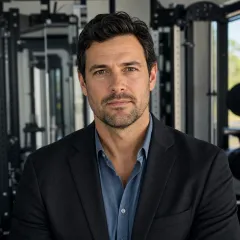
Marcus Feldman
Marcus Feldman is a commercial strength-equipment analyst covering selectorized machines, plate-loaded stations, Smith machines, functional trainers, power racks, benches, barbells, dumbbells, and cable systems. He applies ISO 20957-1 and ISO 20957-2 while comparing rated loads, stability, frame deflection, pulley ratios, cable travel, adjustment increments, guarding, entrapment points, fastener retention, and fatigue cycles. His guides help gym operators, coaches, facility planners, and procurement teams evaluate biomechanics, user capacity, floor layout, maintenance access, durability, and lifecycle value.
Ask Harman about this topic