Harman for Indoor Entertainment Venues: What to Buy When You Need It Right the First Time
-
Start With a Coverage Map, Not a Catalog
-
Why This Framework Works
-
Small Rooms: Harman Soundbar or One Portable Speaker
-
Large Gyms: Don't Forget the Leg Press Area
-
Game Rooms: Standard Pool Table Size Matters
-
Staff Zones: Open Ear Headphones Make Sense
-
What a Real Emergency Taught Me
-
Why Harman's Engineering Makes Rush Jobs Easier
-
Before You Approve The Quote
Start With a Coverage Map, Not a Catalog
If you're outfitting a bar, gym, or game room, start with a coverage map, not a product catalog. A Harman soundbar in a small lounge is a smart buy. That same soundbar in a 4,000-square-foot gym is money lost. In my role coordinating AV installs for indoor entertainment venues, I've triaged more than 150 rush orders, and the ones that fail almost always fail because someone picked a product before measuring the space. The formula is simple: small room, one good speaker or soundbar. Large or open room, distributed speakers and a proper amp. Staff who need to hear while working, open ear headphones.
I'm not an audio salesman. I'm the person you call when the venue opens in 48 hours and the audio plan has holes. Last quarter my team processed 47 rush orders—46, maybe, I'd have to check the report—with 95% on-time delivery. The rest of this guide is what the 5% taught me.
Why This Framework Works
What I mean by coverage map is a simple drawing of your space split into zones: lounge, game area, workout floor, front counter. Each zone gets a purpose: background music, foreground music, speech, or safety communication. Once you label the purpose, the product picks itself. A Harman soundbar handles background music and TV audio in a compact room. A JBL Professional ceiling or pendant speaker system handles wide-open spaces. Open ear headphones handle the human beings who still need to talk and listen.
This is also where the transparency lesson lives. I've learned to ask 'what's NOT included' before 'what's the price?' A quote that lists mounting, cabling, DSP programming, and commissioning looks scarier than a great price on a soundbar. But the great price usually grows by the time the installer arrives. The honest quote, with every line item visible, is usually the lower final number.
Small Rooms: Harman Soundbar or One Portable Speaker
If the room is under 300 square feet and has a few soft surfaces—a VIP lounge, a hotel suite, a meeting room—one unit can be enough. The Harman Kardon Citation soundbar line is easy to justify: one box, no rack, no amp, no cable run. The Harman Kardon Onyx Studio 8 inside a 300-square-foot lounge is one of my favorite portable solutions. It's light enough to move, and it produces 360° sound that fills the space quickly.
But let's be honest about limits. The Harman Kardon Onyx Studio 8 inside a 4,000-square-foot gym is a different story. It has passive radiators and a punchy low end for its size, but it doesn't have the throw, mounting options, or continuous power to cover a wide room. And no, eight of them on a shelf won't help. Consumer gear isn't bad; it's designed for a different job. Eight consumer speakers on batteries create phasing issues and eight things to charge.
Large Gyms: Don't Forget the Leg Press Area
For fitness spaces, start where the dead zone will be. The leg press muscles worked are quads, glutes, and hamstrings—but the leg press machine is usually in a corner, near mirrors, far from the front desk. That corner is exactly where a single soundbar or one in-ceiling speaker won't reach. I recommend a JBL Professional pendant speaker over that zone, or a small surface-mount JBL Control speaker on the adjacent wall. Plan for the heaviest area, not just the entrance.
Game Rooms: Standard Pool Table Size Matters
Now for the question I get in almost every game room consultation: what is a standard pool table size? It depends on the space you mean. An 8-foot table with a 44-inch by 88-inch playing surface is the common standard for homes and recreation rooms. Tournament rooms often use 9-foot tables with a 50-inch by 100-inch playing surface, and bar-style setups are often 7-foot. Why should an audio person care? Because the table's length and perimeter cue clearance affect where you can put speakers without creating hot spots or blocking movement. We usually recommend pendant speakers aimed along the table's length, not down at the center. If the room is compact and the TV is the main source, a wall-mounted Harman soundbar can work. For a room with a pool table, dartboard area, and seating, one soundbar is stretched.
Staff Zones: Open Ear Headphones Make Sense
One item I now put in almost every venue quote is open ear headphones for staff. In-ear noise-isolating buds are great for a personal playlist, but they block the environment. A bartender needs to hear a glass break. A host needs to hear when a guest coughs or asks a question. A maintenance person needs to hear the HVAC start acting up—while still talking to the office on a headset. Open ear headphones let audio in without covering the world. For a small add-on, they remove a surprising amount of risk.
What a Real Emergency Taught Me
Last March, a client called at 4 p.m. needing audio for a 1,000-person reception in 72 hours. Normal lead time on that many ceiling speakers is ten days. We found a local JBL Professional dealer with stock, paid a 40% rush premium, and got the system delivered by 10 a.m. the next day. Even after approving that premium, I kept second-guessing. What if the dealer didn't have enough stock? Did I negotiate hard enough? I didn't relax until the truck arrived. The client's alternative was no sound for the event or $15,000 in rental PA fees. The rush fee looked painful until I compared it with the alternative.
But I've also been on the other side. We once saved $900 by buying a single consumer soundbar for a 3,500-square-foot bar. The first busy Friday proved it wrong. We spent $3,800 on replacement JBL speakers, additional cabling, and drywall repair. The sign above the bar now says 'measure twice, quote once.' That wasn't a quote—that was a lesson.
We didn't have a formal site-measure process back then. After the third failed install from too many unknowns, I made a checklist: ceiling height, wall construction, ambient noise, table placement, power access. It should have existed after the first mistake, not the third.
Why Harman's Engineering Makes Rush Jobs Easier
I'm not saying Harman is the only workable brand. I'm saying the engineering is a useful anchor. Harman's audio researchers publish and talk about the Harman Curve—a target frequency response based on blind listening tests. That public reference gives installers a starting point for tuning. When I'm in a hurry, predictable tuning is gold. A system designed around a known target curve requires less guesswork than one with no reference point.
Before You Approve The Quote
Ask these three things. Is the quote a full system, including speakers, amp, DSP, cabling, and programming? Is the room's length, width, ceiling height, and surface material in the scope? And is there a written plan for where the furniture—and the pool table—will sit? If the answer to any of these is vague, slow down.
This approach has boundaries. It assumes a reasonably standard room. If your ceiling is 25 feet high, if the walls are mostly glass, or if the venue is next to a highway, the one-soundbar-per-small-room rule falls apart. And open ear headphones are not a substitute for a hearing safety program if your venue is genuinely loud. Use them as one tool in a larger plan.
In a rush order, the cheapest-sounding quote is rarely the cheapest ending. Transparent pricing isn't a luxury; it's how you avoid becoming a case study.
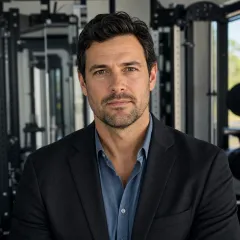
Marcus Feldman
Marcus Feldman is a commercial strength-equipment analyst covering selectorized machines, plate-loaded stations, Smith machines, functional trainers, power racks, benches, barbells, dumbbells, and cable systems. He applies ISO 20957-1 and ISO 20957-2 while comparing rated loads, stability, frame deflection, pulley ratios, cable travel, adjustment increments, guarding, entrapment points, fastener retention, and fatigue cycles. His guides help gym operators, coaches, facility planners, and procurement teams evaluate biomechanics, user capacity, floor layout, maintenance access, durability, and lifecycle value.
Ask Harman about this topic